Articles tagged with "Guidance"
 Credit: Photo by Eric Prouzet
140,000 People Have Been Laid Off, What’s Next

This post is a collaboration between me, Joe Basirico, and one of the best tech recruiters in the industry, Ellen McGarrity. You can learn more about Joe on this website. Throughout you can read Ellen’s take, in her own words in blue text Ellen has spent her 18-year career focused on recruiting in the software tech industry at both large (Microsoft, Amazon, Salesforce) and small (Tableau, Highspot) companies. She has recruited candidates at all levels, domestically and internationally. Originally based out of Seattle, she now lives in the Bay Area with her husband and 2 daughters. A hiring manager and a recruiter’s guide to getting hired.
Read more >>
 Credit: Patrick Tomasso @ Unsplash
AppSec Strategy for AWS Cloud SaaS

The purpose of this document is to outline an application security strategy and roadmap for AWS Cloud SaaS applications, covering both application security concerns as well as AWS specific infrastructure. This is a checklist style article to help start conversations and give you information to perform further research. I’ve referenced other white papers and further reading available for more information throughout. An effective application security program will reduce security risk associated with code development while keeping disruption to the normal SDLC processes to a minimum. Ideally, this is done in an environment that fosters cooperation and transparency between AppSec professionals and the development team as a whole. If the entirety of the team is on the same page in regard to application security goals, and the maturity journey to get there, then the security team can operate as a service organization whose goal is enablement, rather than as a policing organization whose goal is governance.Purpose
Application Security
Read more >>
 Credit: Daniel McCullough @ Unsplash
System Design for Security
My background is as a developer and a security professional, so when I had to learn system design I approached it from that perspective. While I was familiar with many of these concepts, I decided that I had to learn it in depth and in earnest. Now that I know more, I’m convinced that every developer and every security professional should understand these concepts. For all of you who are like me and want to learn more, here’s an overview to help you think about system design, coming at it from a mindset of application security.
Read more >>
 Credit: Barry Weatherall @ Unsplash
AppSec Vulnerability Cheatsheet
There are a number of places online where you can find details about application security vulnerabilities, but it is surprisingly hard to find a single location that provides a summary of all the most important vulnerabilities to be aware of. While any high-risk vulnerability is worth fixing, It’s worth adding a layer of prioritization around the most common vulnerabilities that are being used in attacks and exploits. The following statistics were reported by Contrast Security. While this is based primarily on what they are seeing with their customers, I think it is generally useful:
Read more >>
 Credit: Joe Basirico
Phase One of Appsec Engineering: Awareness
Last week I published a post introducing three important phases of AppSec Engineering: Awareness, Enablement, and Enforcement. Over the next three posts I will dive into each of these topics to share best practices and guidelines you can roll out to optimize your security engineering practice. In my experience, the best AppSec programs start with AppSec awareness training. The goal is to provide your product team with enough information to know when they need security involvement. That’s a broad statement, so let’s break it down.This is part of a series
Read more >>
 Credit: Joe Basirico
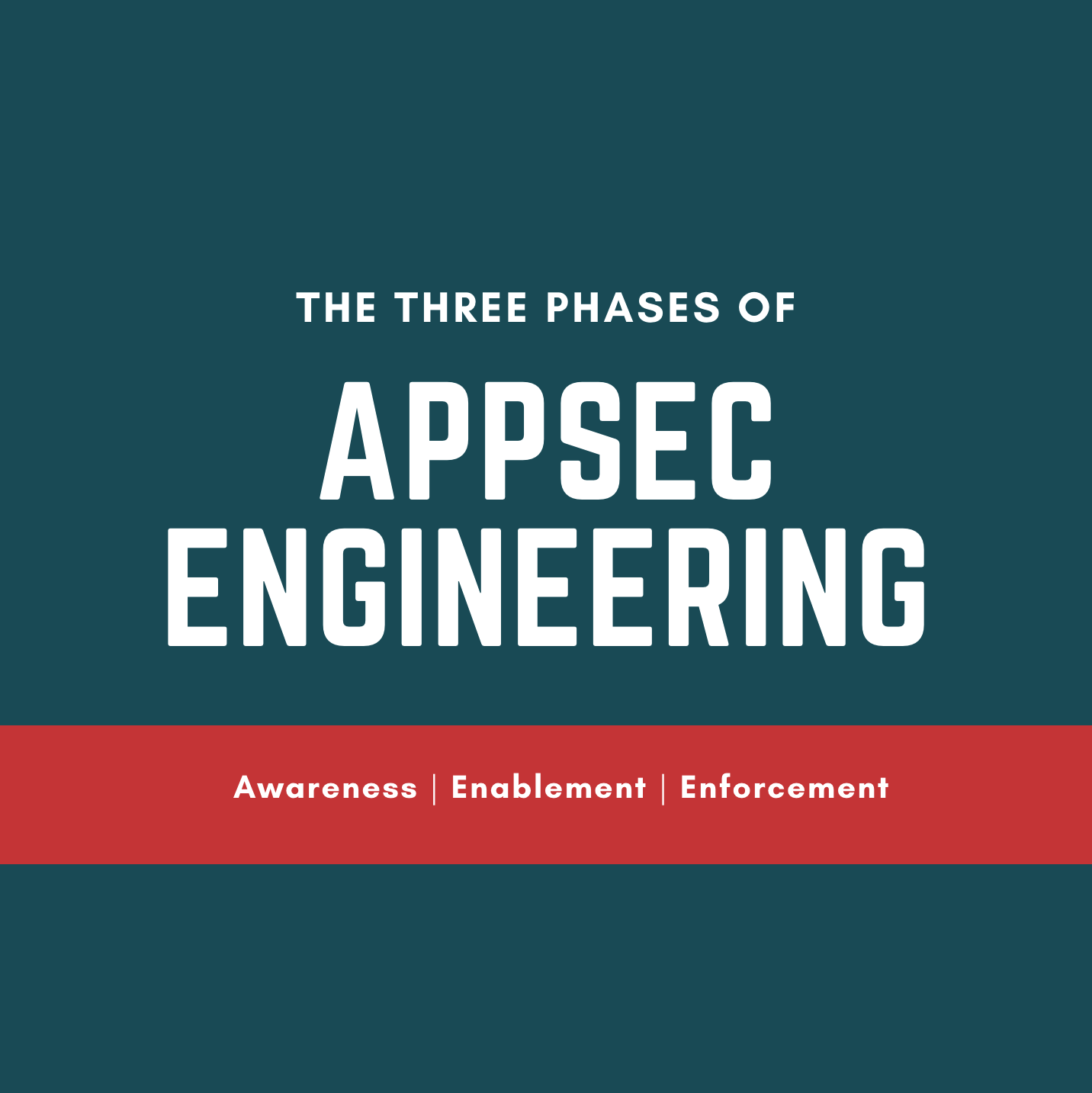
The Three Phases of Appsec Engineering
In order for an AppSec team to collaborate effectively with development teams they should think in three phases: Awareness, Enablement, and Enforcement. This month I’ll be dedicating an article to each. The focus of these articles will be on the critically important area of application security, focused on the roles involved in building software: developers (DevOps), testers, and architects.This is part of a series
Read more >>
 Credit: Alan Bishop @ unsplash
Mini-Post: Stop Acting Like Phishers
There are two sides to preventing a successful phishing attack. The first side is focusing on the user; trying to train users to identify phishing attacks and to protect themselves from these types of attacks. Training is important, but there’s a responsibility on the company to act in a way that does not emulate common phishing techniques and set your users up for failure. The second side of the successful phishing attack is the software and technology side. There are many techniques that companies can employ to make it easier for their users to identify fraudulent emails and there are some great security features that can be developed in your application and website to help protect users from the damaging effects if they do mistake a phishing email for a real one.
Read more >>
 Credit: Joe Basirico
Mini-Post: Reducing Vulnerability Classes to Near Zero Through Secure Defaults and Good Choices
“If you could wave a magic wand and do anything to reduce vulnerabilities, what would you do?” Some common answers are things like training and education, forcing penetration testing, better tools, and smarter users, but none of these things really strike at the core of the issue. Where is the vulnerability garden? Where are those vulnerabilities planted? Can we make that soil hostile to vulnerabilities and rich for good coding practices?
Read more >>
 Credit: Visual Cinnamon & NY Times
You Have an Obligation to Fight for Privacy
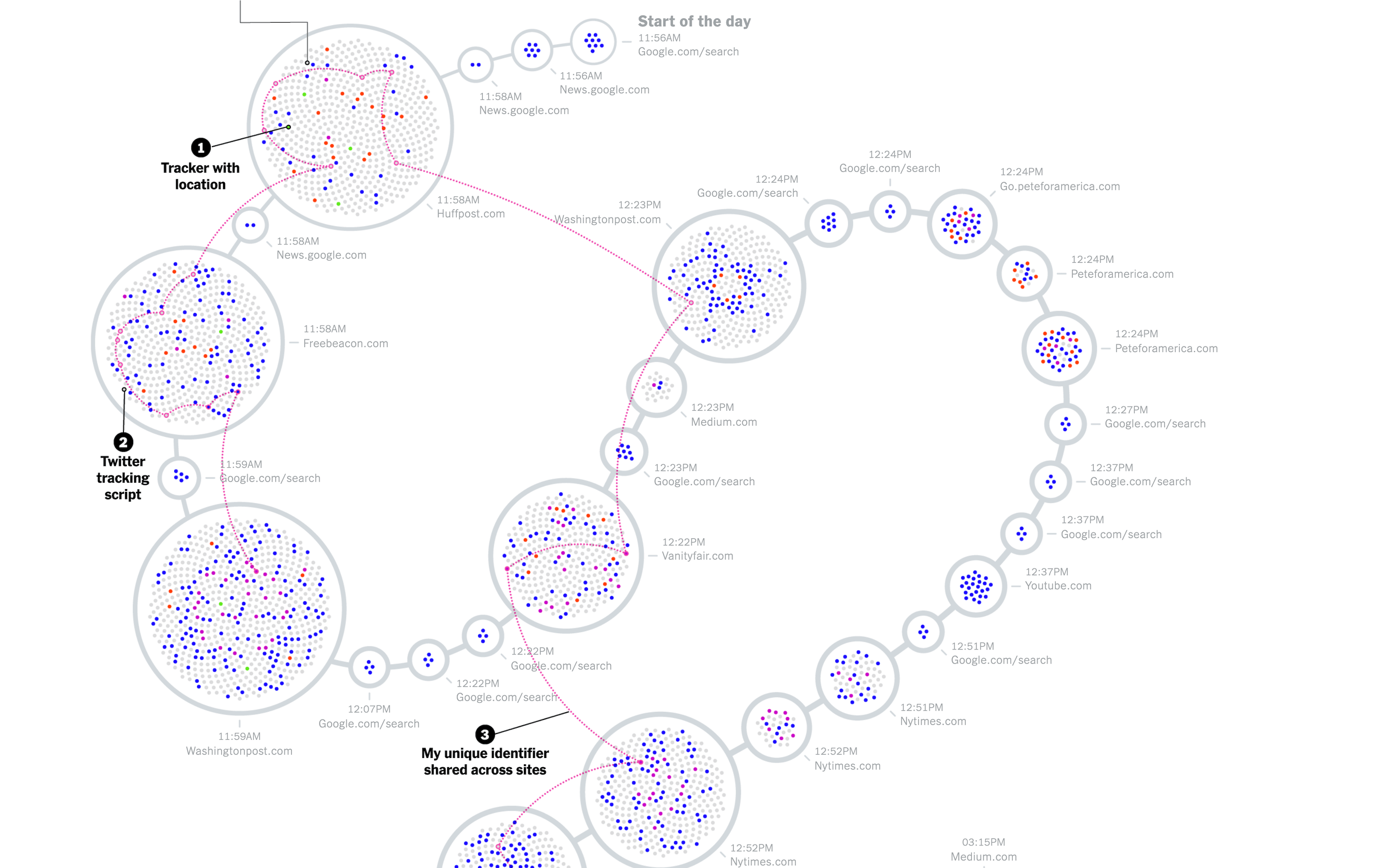
Note: The header image was created by Visual Cinnamon for The New York Times on an opinion piece on digital trackers. By now everyone is familiar and desensitized to cookie popups that bombard us on our first visit to almost every. These cookie consent alerts are there for a reason, they are required by new legislation such as GDPR and the California CPA. This legislation has been introduced to try to protect consumers from boundless data collection policies , which is a laudable goal. I’m not certain how much of a difference it’s made though as most users accept the terms as quickly as a EULA or a Windows Security Warning popup. Recently Senator Sherrod Brown has realized this and is trying to shift the burden of privacy from consumers onto the companies that hold the data. No longer will it be enough for a company to fall back on the “but you clicked on the Privacy Policy button” defense:
Read more >>
 Credit: Pexels
How to Scale an Application Security Program - Part Two
In my last blog post, I wrote about what an application security program is and why it matters. In this post, I’ll cover what it takes to build and scale an effective application security program. I’ve seen many different ways that a well-intentioned program can fail to meet its objectives. While there may be many ways to fail, there are just a few key characteristics that lead to success. The program must be:
Read more >>
 Credit: Pexels
How to Scale an Application Security Program - Part One
In the late 1990s I worked on the security team for Internet Explorer. In fact, I was the first hire that Microsoft made in response to an influx of browser-based security vulnerabilities. I got to see what it looks like when a development team is bombarded by security problems that are serious enough to require a response and yet there’s no process to handle it. In the early days we would get at least one new vulnerability each week. The cost to respond was over one million dollars - per vulnerability! Every time it happened, we had to stop development, understand the problem, understand the fix, test the fix, and then release to customers. A team of over four hundred developers and testers was stopped in their tracks on a regular basis. You can only do that for so long before you realize that something has to change. On the Internet Explorer team we developed a new set of processes, skills, and tooling that allowed us to rise to the challenge. We did what we had to do to solve the problem while under a constant barrage of enemy fire. In the end, we built and scaled an application security program that worked not only for Internet Explorer but for the rest of Microsoft product development as well. Today that process is called the Microsoft SDL and Trustworthy Computing.
Read more >>
 Credit: Kroll Historical Maps
A Traveler's Method of Learning Technology
My favorite thing about my career in security consulting has been the constant opportunity to learn new topics. Security weaves itself through every aspect of software, and software is everywhere. The phone in your pocket, the bluetooth chip in your headphones, your automobile, and the SCADA systems you rely upon every day execute millions of lines of code on your behalf. The idea that each of those systems gives me the opportunity to gain new knowledge is truly exciting. It can also be daunting when there is always so much to learn.
Read more >>

Defense in Depth, What I Should Have Done to Save Myself From Dire Injury
I caught three of my fingers in a tablesaw this last weekend, which caused a severe hand injury, mangling my fingers, tearing off my fingernails, and breaking the bones. It was pretty terrible, but luckily the hand surgeon says I should have a complete recovery in a few months. Me being me, this got me thinking about some of the things that I could’ve done to mitigate the injury before it happened. It struck me that the threat modeling I was doing for my own physical safety, is analogous to a lot of the recommendations and guidance that I give companies for software security. In my case, my recommendations to myself boil down to the importance of focus while performing monotonous tasks, and the necessity for defense in depth.
Read more >>